
More efficiency, more precision, no bend marks
FiMAB takes the production of electrical enclosure cabinets to a new level with the RAS UpDownCenter 2
66% less bending time, 22% faster welding and no more bend marks on visible surfaces: family-owned FiMAB in Neubulach, Germany, has been producing its enclosure cabinets on the RAS UpDownCenter 2 for three years.
- 66%less bending time
- 22%faster welding
- 17%savings in cutting
- 500 mmbox height at FiMAB (machine up to 600 mm)
With the RAS UpDownCenter 2, FiMAB has taken the production of electrical enclosure cabinets to a new level. One-piece production, automatic tool setup and precise step bends, including for medical technology applications, allow the family business from Neubulach to combine tradition with modern automation and to produce small batches and one-off cabinets economically.
The results at a glance
- Enclosure cabinets in one piece instead of several parts
- 66% less bending time, 22% faster welding, 17% less cutting
- No bend marks on visible surfaces
- Automatic tool setup even with frequently changing sizes
At FiMAB, tradition and innovation go hand in hand. Now in its second generation, the family-run company employs around 30 people, including several apprentices. Developing its own skilled workforce is a firm part of the company strategy.
“Preserving what works while embracing new ideas perfectly reflects who we are,” says Markus Fiedler, Managing Director of FiMAB. Investing in the RAS UpDownCenter 2 was the logical next step in bringing this philosophy to the shop floor.
Enclosure cabinets at the heart of production
FiMAB generates a quarter of its turnover from enclosure cabinets. The company produces high-quality steel and stainless steel enclosures for special-purpose machinery and mechanical engineering customers, wherever an exact fit is critical. “Our customers require enclosure cabinets in a wide variety of sizes and configurations. Producing this level of product variety economically is one of the biggest challenges in manufacturing,” explains Markus Fiedler.
Many inquiries come in via an online configurator and are passed straight to production through digital interfaces. The CNC programs for laser cutting and metal folding are generated automatically and are available immediately.
Before the investment, many enclosures were produced on a press brake. That meant several parts per enclosure, numerous weld seams, extensive setup and adjustment work, and manual turning of the sheets between operations. Press brake bending also left visible marks, a clear quality drawback for high-end visible enclosures. Side panels had to be attached and aligned separately, which took extra time and introduced potential errors.
The UpDownCenter 2 as a powerful bending center
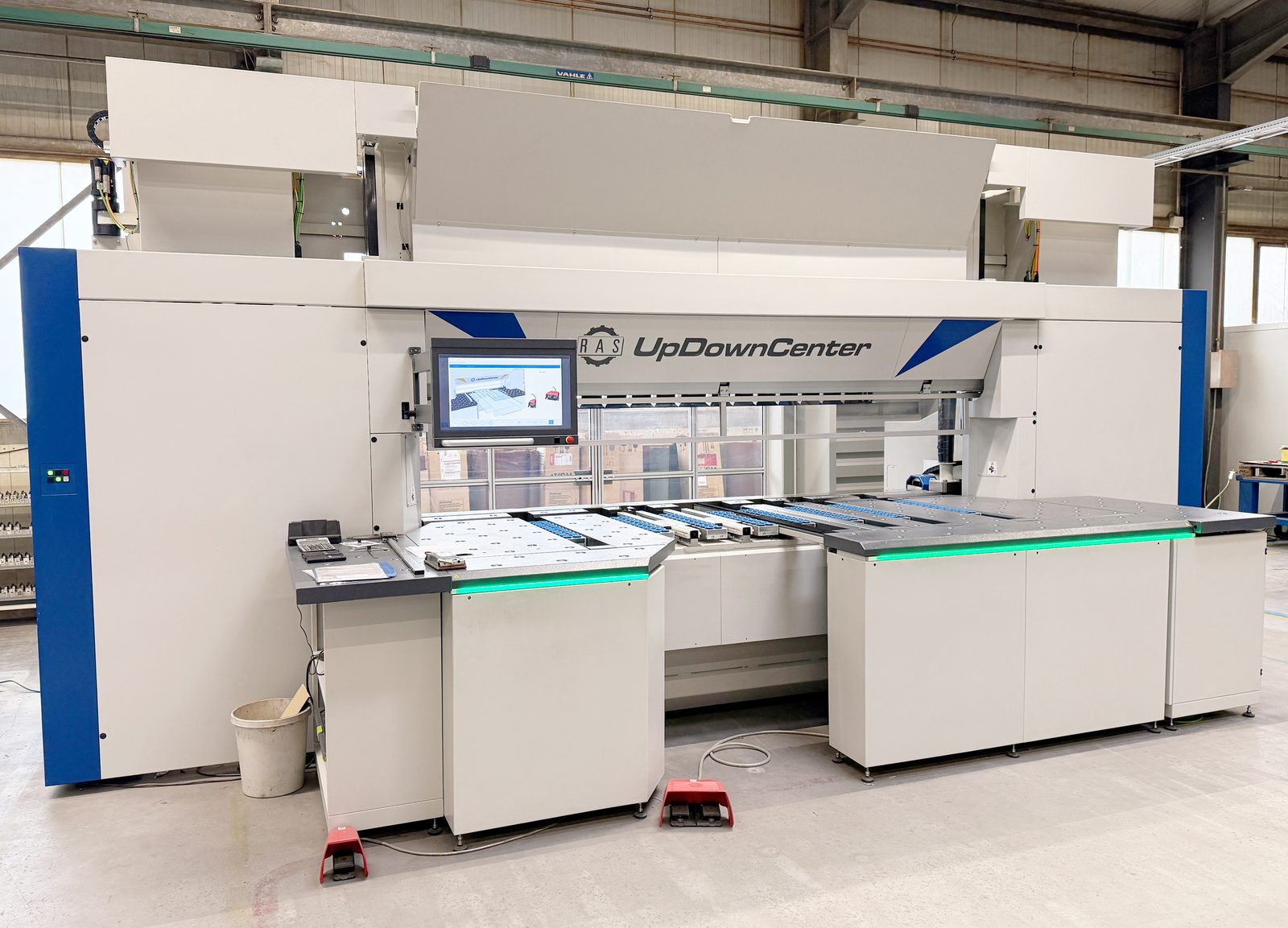
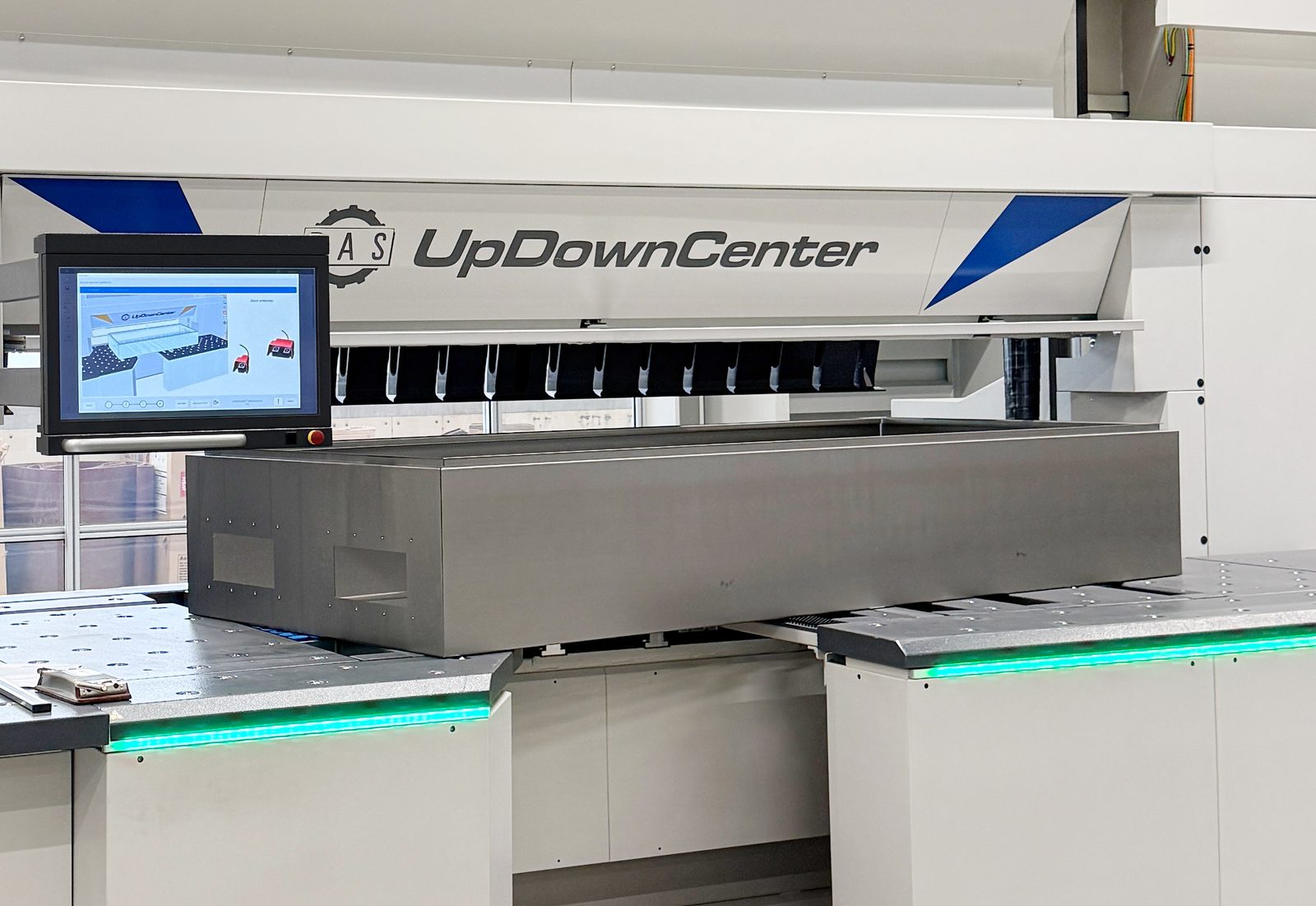
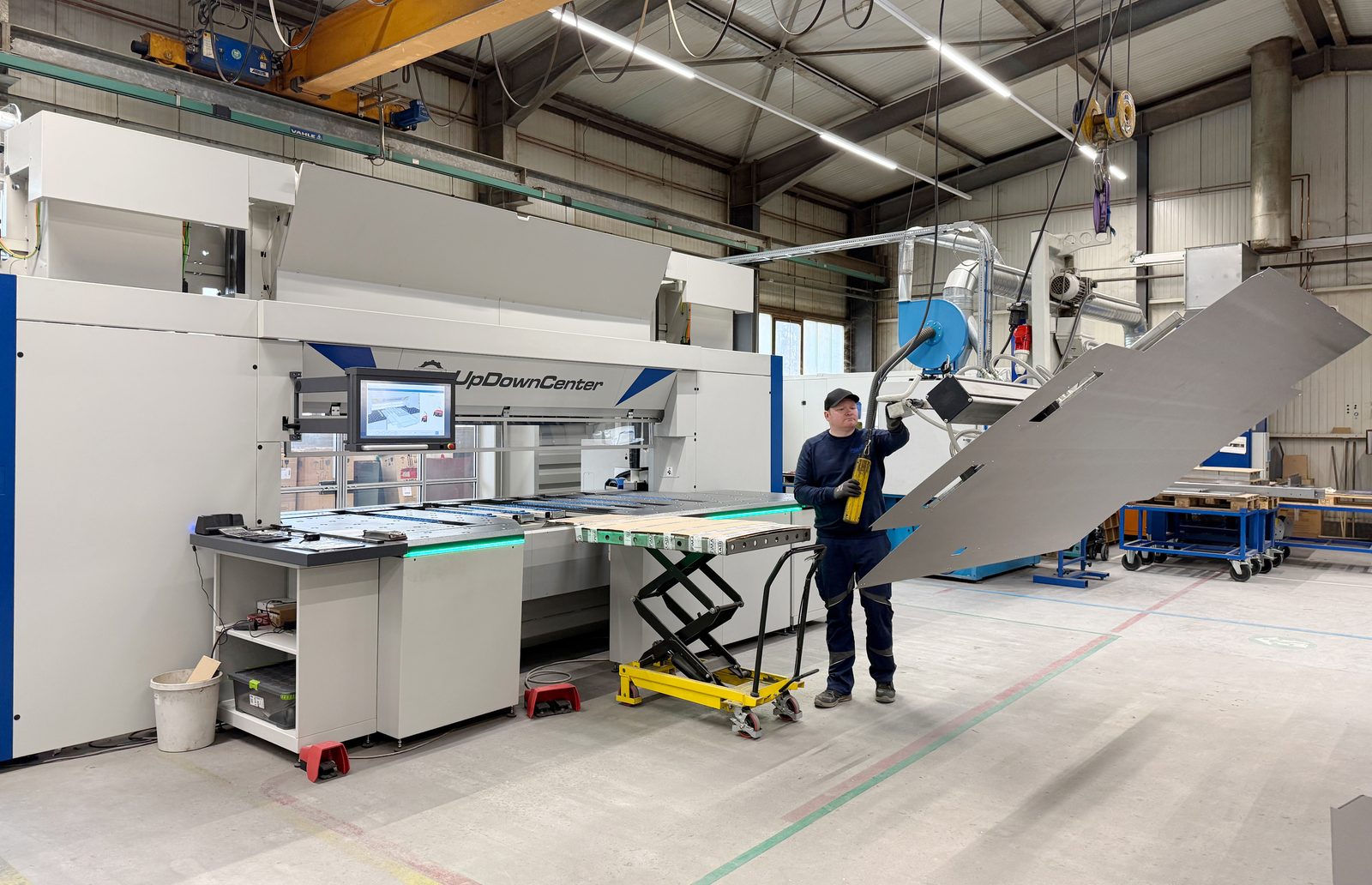
With the UpDownCenter 2, FiMAB relies on a semi-automatic bending center for high-precision panels and boxes. The machine handles bending lengths up to 4,060 mm and box heights up to 600 mm. With a bending capacity of up to 4 mm mild steel, it covers the thin and medium sheet thicknesses that account for most enclosure production.
The machine is operated from the gauging side. If required, parts with long or high flanges can also be removed from the folding beam side, which supports an ergonomic and reliable material flow.
One piece instead of many parts
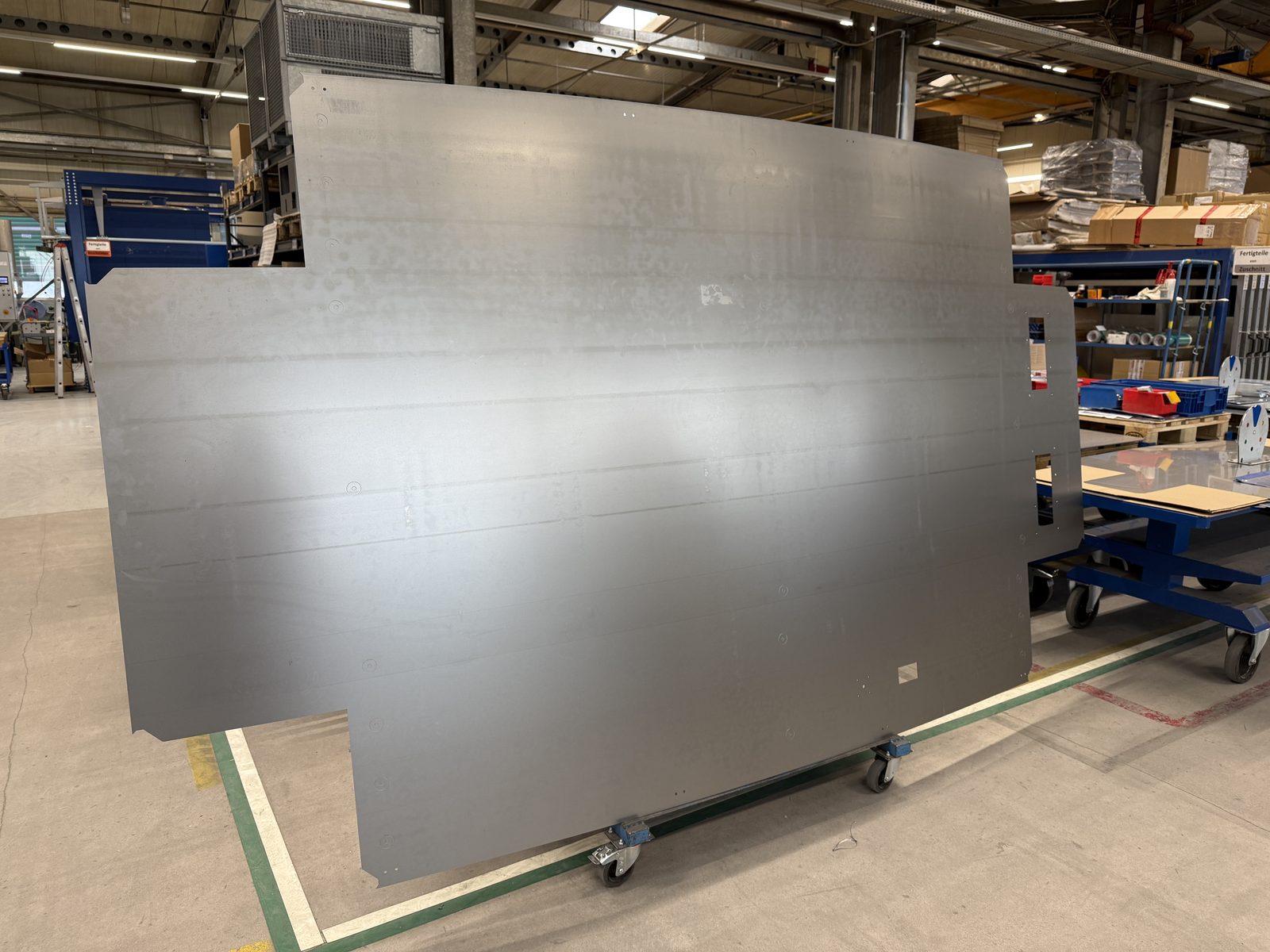
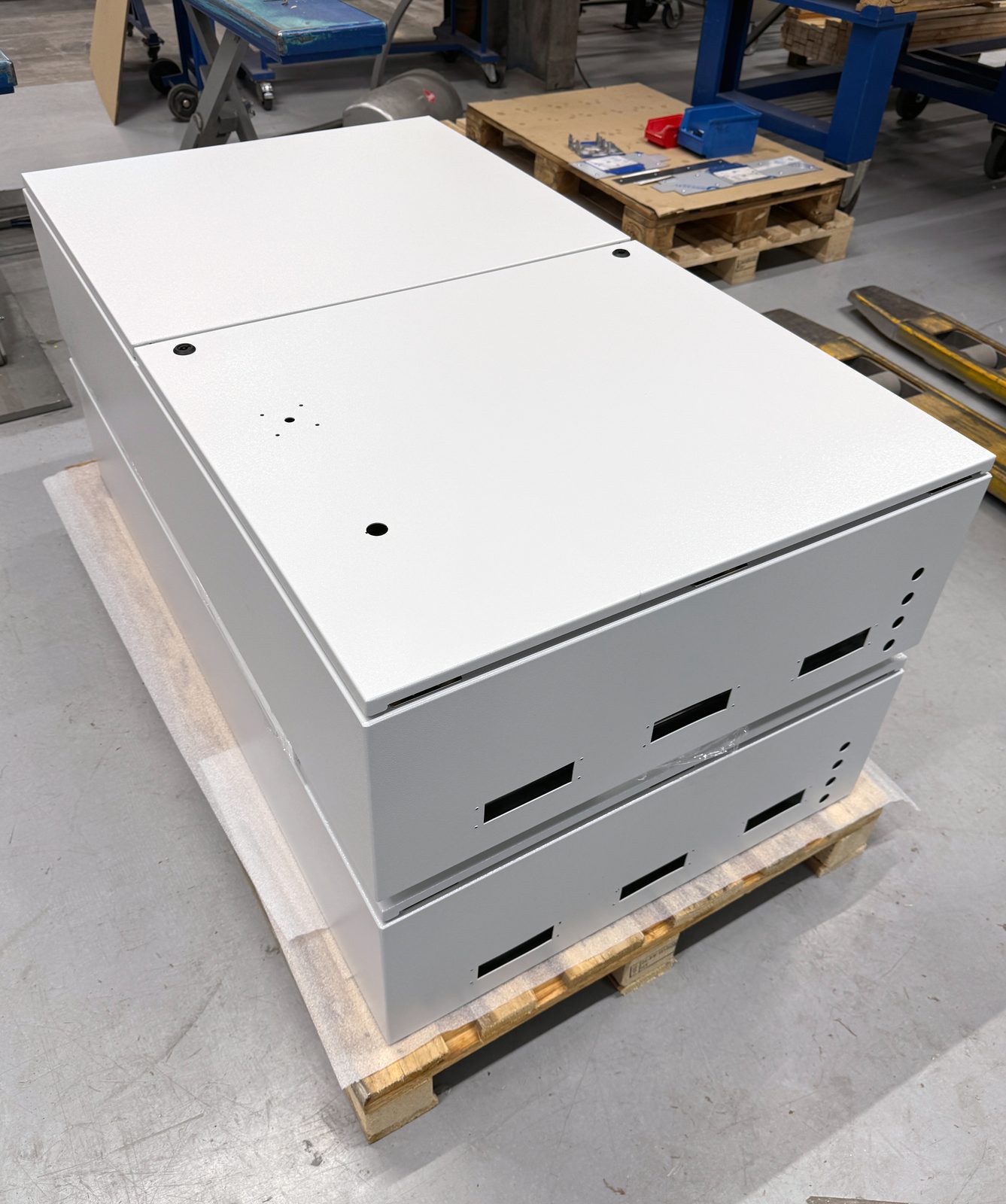
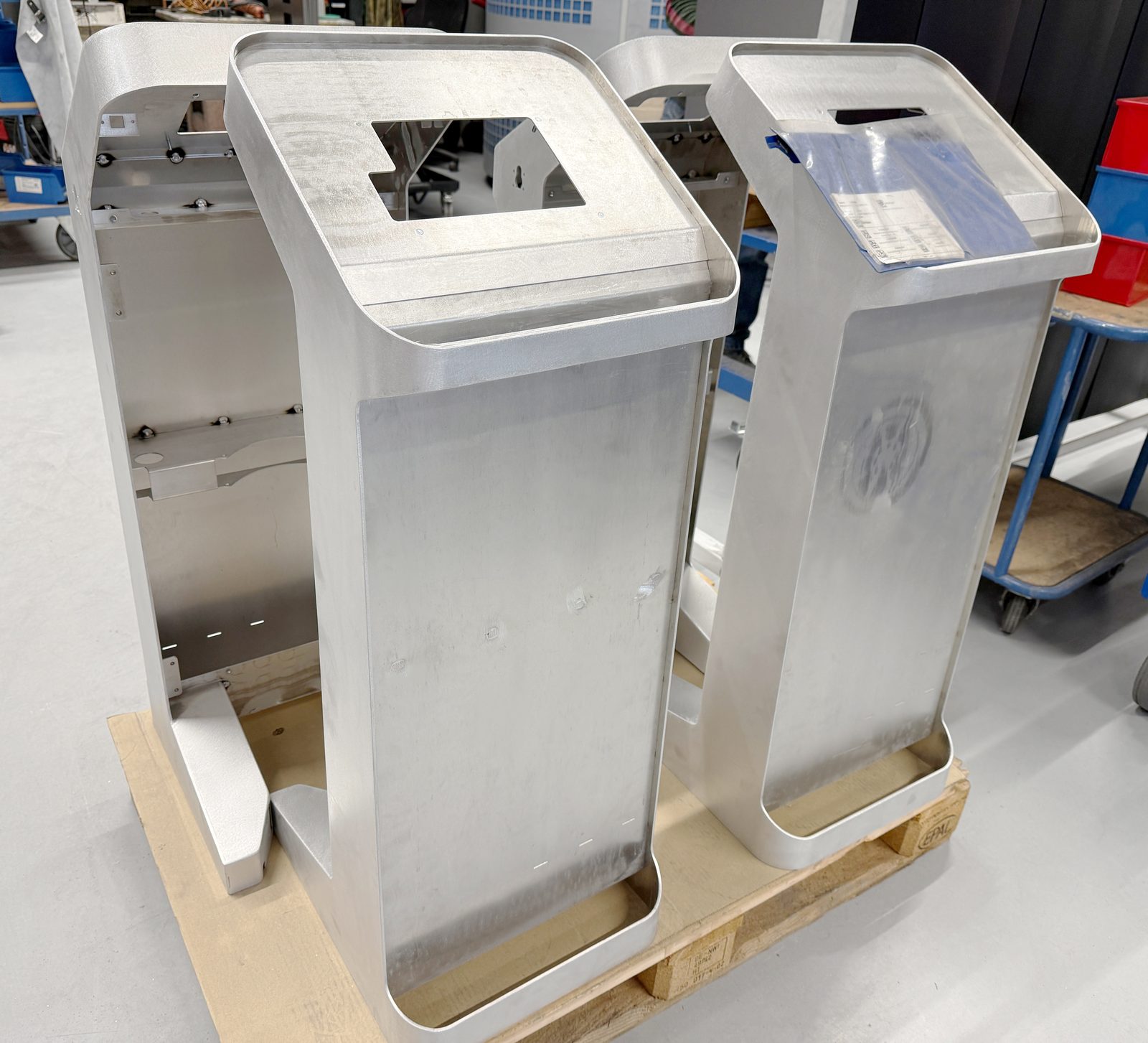
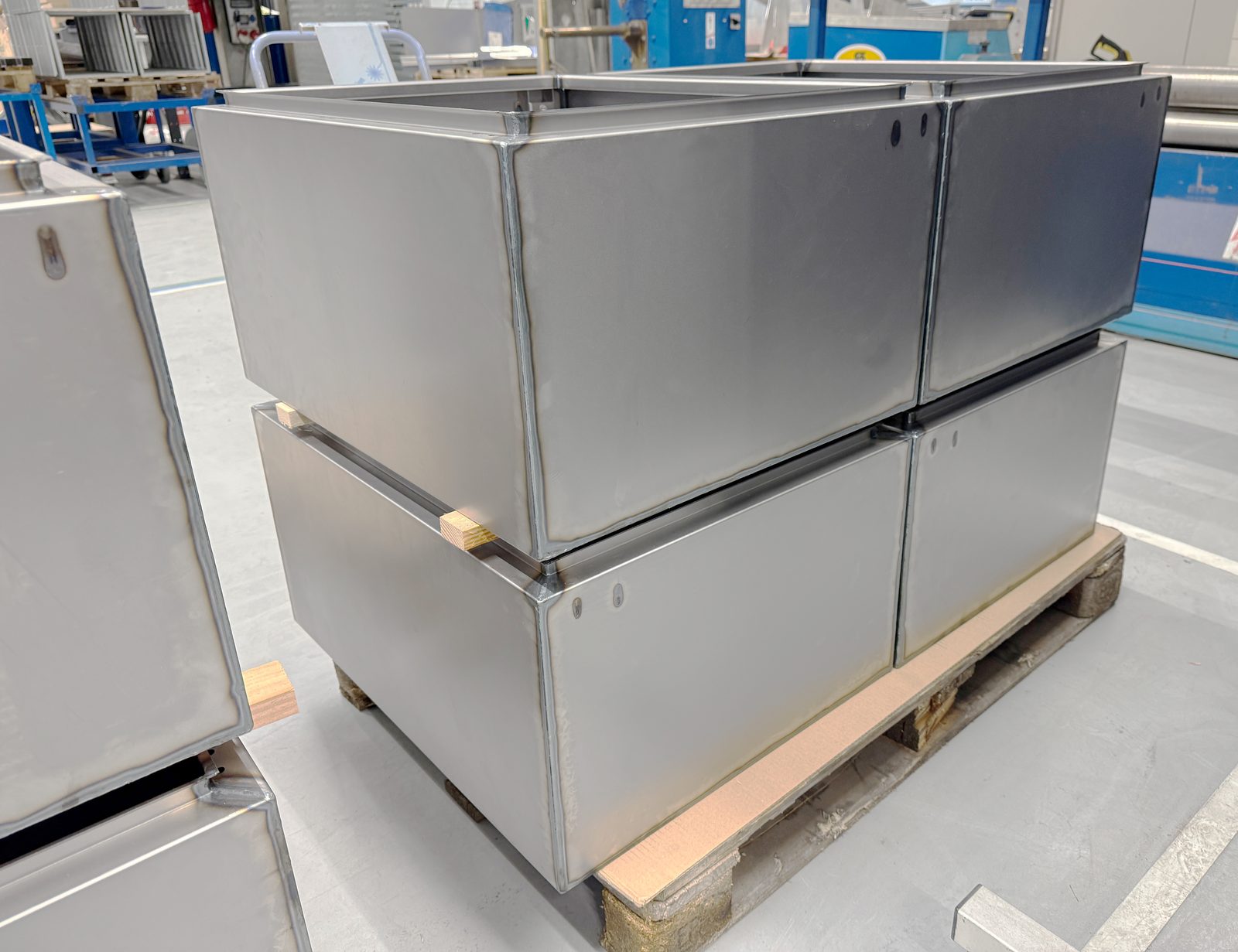
FiMAB deliberately chose a technology that forms deep enclosure cabinets from a single sheet. “Our key requirement was the ability to manufacture many enclosures from a single blank. That saves weld seams and significantly reduces potential sources of error,” explains Thomas Ohngemach, Production Manager at FiMAB. Unlike press brake bending, metal folding leaves no bend marks. Surfaces stay clean and even, and rework is reduced.
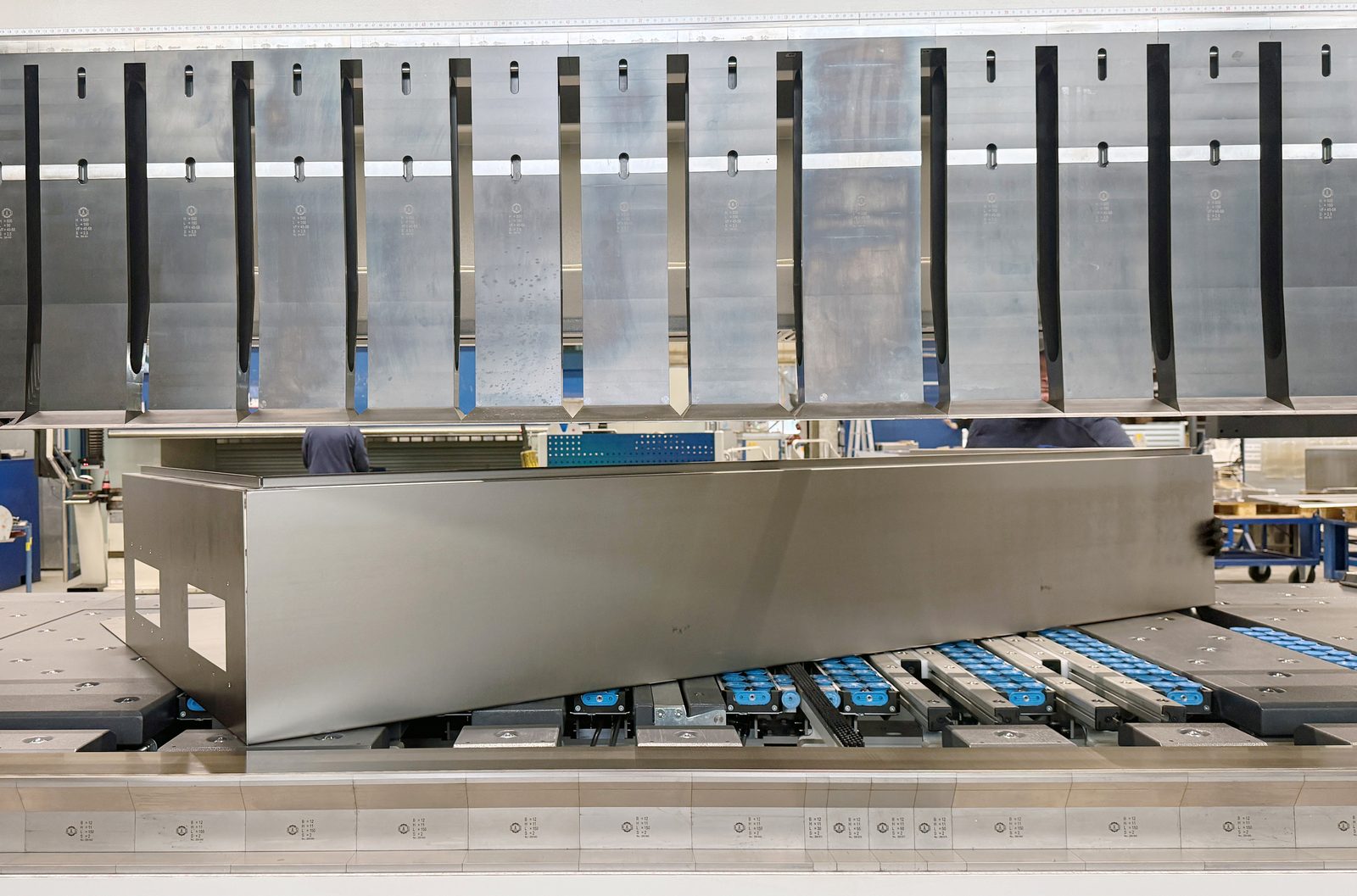
On the UpDownCenter 2, FiMAB processes sheet thicknesses from 0.5 to 3.0 mm. Large cassettes and deep enclosures benefit most. With UpDown bending, the blank stays on one side throughout the process, even in large formats. There is no need to turn it between bends, gauging errors are reduced and repeatability improves noticeably.
“Our key requirement was the ability to manufacture many enclosures from a single blank.”Thomas Ohngemach, Production Manager, FiMAB
Automatic setup for seamless production
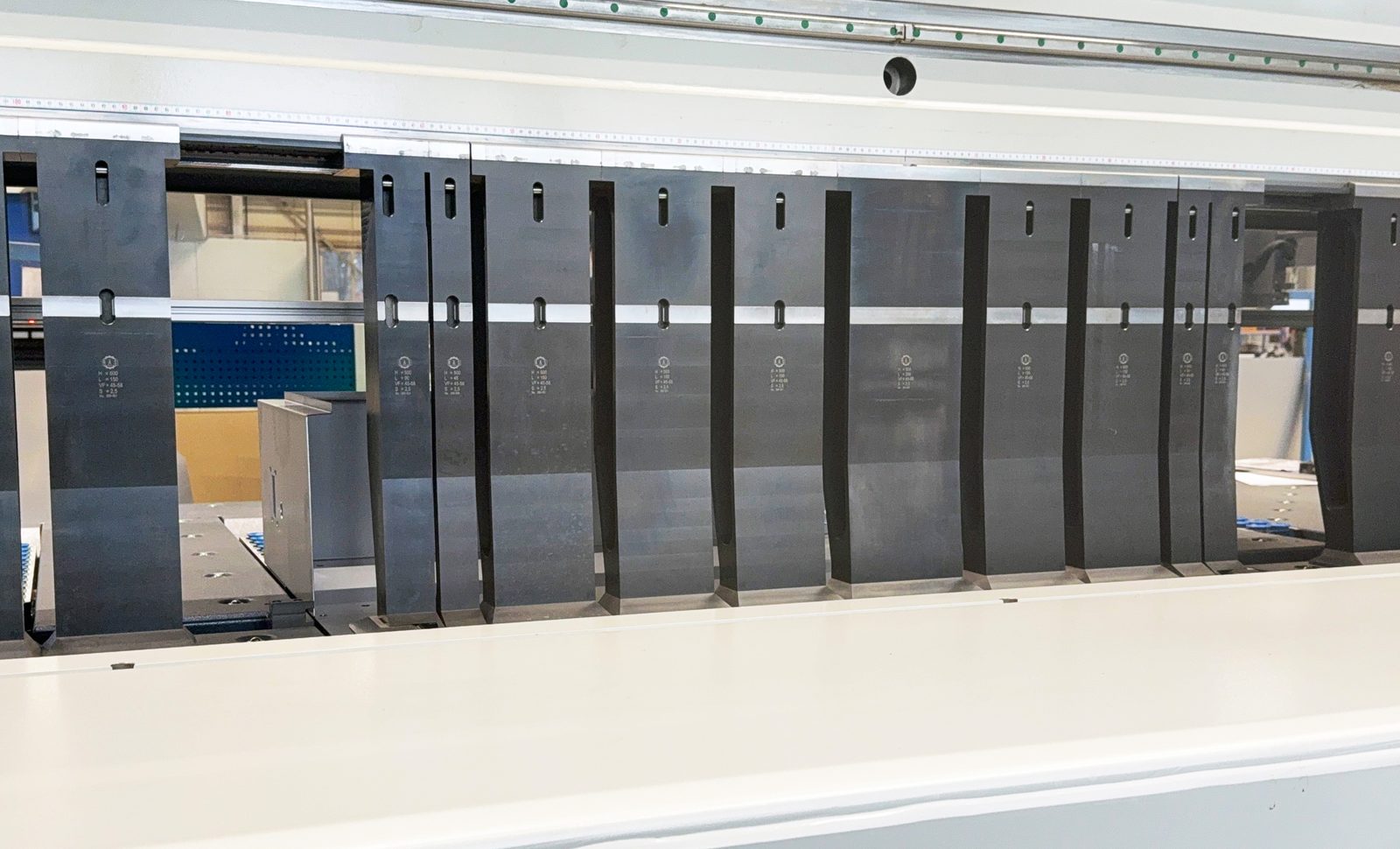
Automatic tool setup is a key efficiency factor. While the next part is being loaded, the machine changes its tooling on its own, with no separate setup programs required. Tools no longer have to be inserted by hand, which saves time and is easier on the operator. Production stays continuous and stable, even with frequently changing cabinet sizes and individually configured enclosures.
Measurable gains along the process chain
The UpDownCenter 2 has been in operation at FiMAB for three years, with clearly measurable results. Cutting requirements are down 17 percent because many enclosures are made in one piece, reducing the number of parts and production orders.
In bending, the time from loading to unloading a part has fallen by 66 percent. This is thanks to eliminating manual gauging for every bend, far less adjustment work and automatic tool setup. At the same time, part precision and quality have improved.
Welding is 22 percent faster as well. Because side panels no longer need to be attached and aligned separately, the effort drops considerably. Mistakes such as swapped sides are a thing of the past, enclosures fit more accurately and processes are more reproducible.
Software that simply works
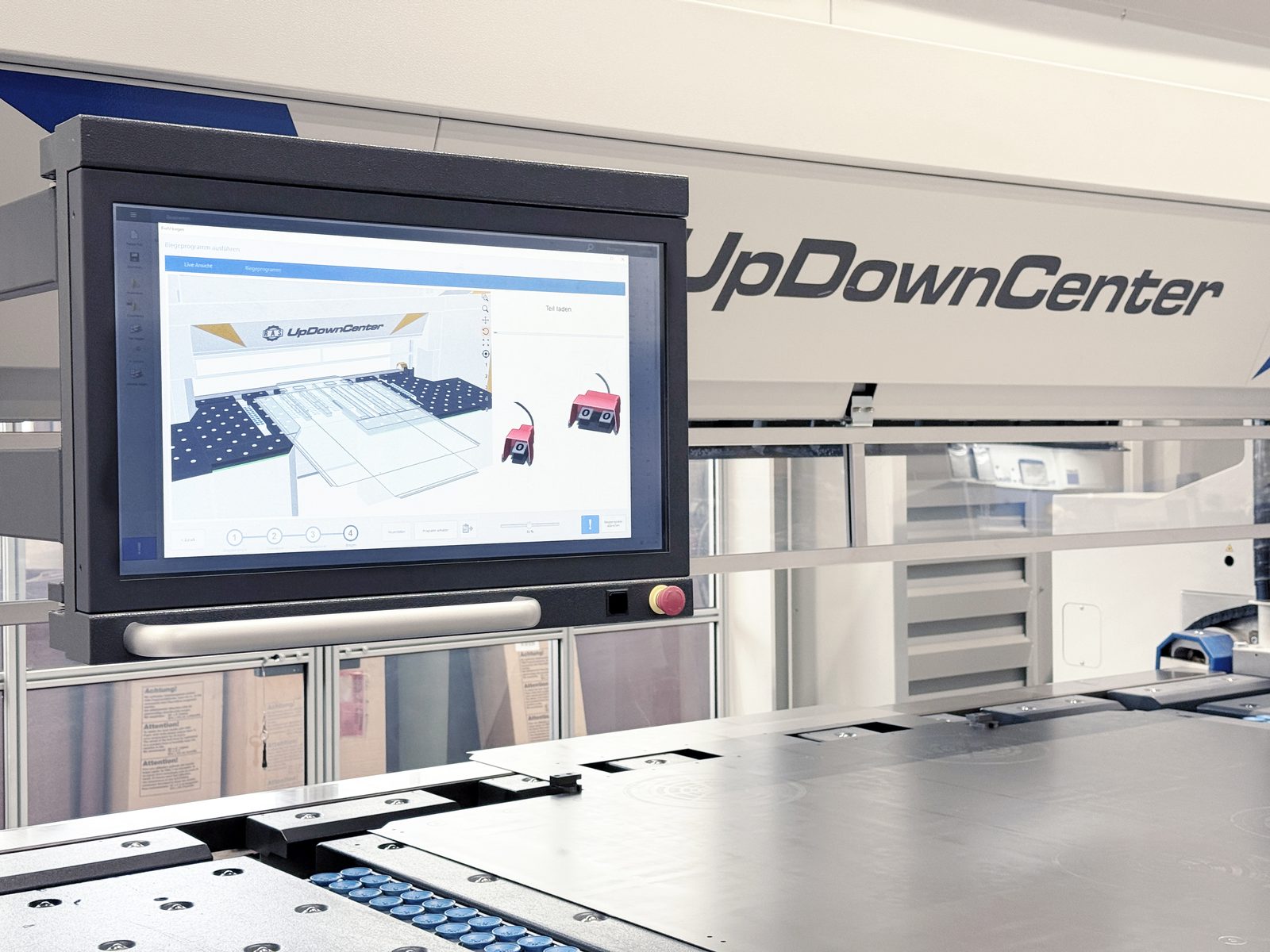
Another decisive factor was how easy the RAS Bendex software is to use. FiMAB mostly creates programs directly at the machine, although this is also possible in the office. The interface is intuitive and quickly adapts to different cabinet sizes. In comparison, alternative systems were seen as considerably more complex.
Box height was another key factor: FiMAB bends boxes up to 500 mm high, and the machine can handle up to 600 mm. There are hardly any comparable solutions on the market. Being close to RAS played a role too: short distances, personal support and the chance to test sample parts strengthened confidence in the investment.
A forward-looking investment
Fewer weld seams, no bend marks, precise step bends, much shorter setup times and noticeable time savings across several process steps make the UpDownCenter 2 a central part of FiMAB’s production strategy.
“Choosing the UpDownCenter 2 was the right decision for us. We work more efficiently, achieve greater precision, and consistently deliver higher quality to our customers.”Markus Fiedler, Managing Director, FiMAB
Inside production at FiMAB
Do you produce enclosure cabinets or housings?
Send us your parts. We will show you in Sindelfingen how the UpDownCenter 2 produces them.